sahrish shamim


 Life, with all its twists and turns, is a masterpiece waiting to be painted by the strokes of our experiences, emotions, and relationships. The essence of truly living lies in the ability to embrace each moment with gratitude and love. In my journey through the tapestry of life, I've come to realize that loving your life is not just a phrase; it's a profound philosophy that can transform the ordinary into the extraordinary.

One of the pivotal lessons life has taught me is the importance of embracing change. Life is ever-changing, and our ability to adapt and find joy in every circumstance is crucial. As the renowned author Victor Frankl once said, "When we are no longer able to change a situation, we are challenged to change ourselves." Life's challenges are inevitable, but our response to them defines our journey.

I vividly recall a period in my life when I faced unexpected setbacks. The initial instinct was resistance, but I soon understood the power of acceptance. It was during those moments that I discovered the strength to transform adversity into an opportunity for growth. Each obstacle became a stepping stone, and in the process, I fell in love with the resilience of the human spirit.

Love your life not only in moments of triumph but also in the face of failure. Embracing failure is an art that teaches us valuable lessons. Oprah Winfrey beautifully encapsulates this sentiment, "Think like a queen. A queen is not afraid to fail. Failure is another stepping stone to greatness." When we learn to view setbacks as stepping stones, we unlock the door to self-discovery and personal evolution.

Relationships, another integral facet of life, have played a significant role in shaping my understanding of love. Cherishing the bonds we form with others is essential in cultivating a life rich in meaning. In the words of Maya Angelou, "I've learned that people will forget what you said, people will forget what you did, but people will never forget how you made them feel." It's the connections we forge and the love we share that create lasting imprints on the canvas of our lives.

Gratitude is the paint that adds vibrancy to our existence. In moments of reflection, I often turn to the wisdom of Eckhart Tolle, who said, "Acknowledging the good that you already have in your life is the foundation for all abundance." Gratitude is not merely a fleeting emotion; it's a way of life. When we learn to appreciate the simple pleasures, we discover that our lives are already abundant with joy.

Loving your life is not about waiting for the extraordinary to happen; it's about finding the extraordinary in the ordinary. Each sunrise, each laughter-filled moment, and each challenge overcome are threads woven into the intricate tapestry of our lives.

In conclusion, as we navigate the unpredictable journey of life, let us adopt an attitude of love and gratitude. Embrace change, learn from setbacks, nurture meaningful relationships, and practice gratitude daily. In the words of Rumi, "The wound is the place where the light enters you." Love your life, with all its imperfections, for it is through those imperfections that the light of our unique existence shines brightest.

Easy day


"There really is no good or bad, right or wrong, left or right. These are concepts and labels created, agreed to and then thought of as "real." I choose to no longer believe things just because everyone else does--this closes down my soul. When I ascribe to these without examining what lies beneath them, I limit my thinking. My mind--the creation point of my spirit--is held hostage. I have chosen to make myself less by my own unquestioned belief system." ~Robin Korth
Easy day


I SUPPOSE IT’S ODD THAT A NOT SO RELIGIOUS PERSON BELIEVES IN ANGELS, BUT HERE I AM. I BELIEVE.

There are several instances in my life that can’t be explained away as mere coincidence. I suppose a cynic might chalk it up to happenstance but that doesn’t change the way that I view things. My heart and soul have different eyes and I trust what they have seen.

When I was a freshman in college I lived through a natural disaster. A freak once-in-a-century flood overwhelmed my town and the surrounding areas. I lost nearly everything as the waters rose close to the rooftop of my second story apartment building. I was blindsided and completely devastated.

Many people lost their homes and the college had to temporarily shut down because so many students had no place to live. I found myself standing in line at food banks and relying on organizations like the Red Cross and FEMA for clothes and a mattress to sleep on. Social workers and crisis counselors that knew how to connect with recently traumatized students provided badly needed emotional support.

IT WAS AN EXTREMELY HUMBLING EXPERIENCE FOR A NINETEEN YEAR OLD THAT GREW UP IN THE COMFORT OF THE SUBURBS.

So many people volunteered and came forward to help as the city ground to a standstill with no power and no clean water. It was tragic but it was in this coming together of strangers and neighbors that there was also astounding beauty.

The gratitude I felt for these people and for the smallest of gestures from friends and family can not be measured. I suppose that’s what makes gratitude what it is, an overwhelming heart bursting feeling that can’t be quantified or manufactured. Even when I had nothing, I had gratitude in spades. This is what kept me from drowning.

Once the waters finally receded and my apartment building had been condemned I was cleared to go in and survey the damage. It was unreal walking back into what had once been my home. I had learned to fear fire and practice fire prevention in the homebut nobody had ever warned me about the danger and devastation of floods.

The toxic mold that had sprouted everywhere required special goggles, gloves, and masks to breathe through. I noticed that some of the furniture could be salvaged. I was relieved and ecstatic to have anything familiar to add to my new and barren apartment. I realized I was there alone with only my boyfriend to help. The two of us could not move the furniture let alone transport it. I went outside and noticed that my neighbors, all fellow college students, had parents and family helping them. I watched them load up their trucks and comfort their stressed out kids.


I STOOD THERE AND FELT INCREDIBLY ALONE.

Just as I was giving up rescuing anything from the destruction a van pulled up to the side of the road. A family of four jumped out and the dad yelled;

“You kids look like you need some help!”.


I nodded and explained the situation. Astounded, I asked them what they were doing… why they were here… how they were here in my moment of quiet need.

They explained how they saw the devastation from the flood on the news and drove from another state to see what they could do to help. My street was one they happened to drive down just as I was sitting outside with my head in my hands.

Without hesitation they loaded up what was salvageable of my belongings and drove them to my new apartment across town. Not once did they complain about the toxic mold, the weight of the furniture, or how far the new apartment was from the old one. They simply acted.

When they were done I thanked them profusely. I offered to pay them once I had some money and asked for their mailing information. They refused. With warm hugs all around, they wished me good luck in my new life and disappeared just as suddenly as they had appeared.

I don’t know what to make of these people that did this incredible thing for me in the aftermath of a tragedy. I don’t even know their names. So I call them Angels. And anytime life has thrown a storm my way, I remember these Angels that walk among us and how they saved me that day.

I remember them and their goodness that stood in the middle of miles and miles of destruction. I remember them and know that they, and others like them, are out there.

HAVE YOU MET ANY ANGELS?


BY STEPHANIE MARCH

Stephanie is a writer, survivor, and advocate.
Easy day


The sun was a spotlight through the windshield. I shook my head and blinked my eyes to make sure that what I was seeing was real, to make sure that it wasn’t a trick of the light, that I wasn’t mistaken. I flexed my fingers on the steering wheel to make sure the hands on it were actually attached to my arms.
Raised veins snaked across the back of my outstretched hands. Sharp lines defined them instead of soft angles. There were age spots where there was once clearly smooth flesh. Wrinkles framed the knuckles, not gently contoured skin. How could these belong to me? These are the hands of an old woman!
This truth widened up from my tailbone, skittered down my back and fingered across my shoulders. My going-grey hair lifted at the back of my neck as full awareness shot through me and I splayed my fingers in a gut-sigh of surprise. These are my hands! This isn’t a concept. This isn’t a spiritual axiom. This isn’t me being centered and oh-so-wonderful in the face of my culture telling me my body is too old.
A few months before, a man had called me “wrinkly” and I thought I’d weathered this transitioning of me towards old. I’d written about it in an article called “My ‘Naked’ Truth“ and I’d received accolades and anger for talking about standing naked in front of a mirror honoring my aging body. This was different. This was way different.
This was me being totally inside the shifting of my years. This was bloody and raw reality pouring through me at the level of my DNA. I had become someone else while I wasn’t looking. It was as if a little kid in the grocery store was pointing at me and asking, “Mommy, what’s wrong with that lady? Why does she look that way?” And there I sat in the car and I cried. This is it. This is my life — and so very, very much of it is gone.
A voice in my head laughed wickedly as it sneered, “Did you really think you were going to get away with this so easily? Did you really think you were done with this aging thing? How arrogant of you! How foolish of you!” As my tears welled and rolled, all I could think of was how very innocent I had been.
I don’t know how to do this third age of my life — these years between middle-age and old. I don’t have a roadmap for what lies before me. I’m not some airbrushed and face-lifted women happily hawking anti-aging cream. “Noticeable difference in as little as three weeks!” I’m a child of the 1960s and 70s where rock and roll was my birthright. I was going to change the world and the “Age of Aquarius” meant I would be forever young. I felt cheated and somehow betrayed. This wasn’t supposed to happen to me. But it has. My hands are telling me that my youth is done. I’ve become the grey-haired lady in the drug store.
As I head into my 60th birthday, a whole new feeling about myself is emerging. Everything that I thought was valid and settled is now up for grabs. I don’t want to be doing the same things I was doing a year ago or five years ago. I want to misbehave. I want to kick this thing called “my life” and rock it wide open. I want to dance it and question it. There is an aching need for me to tear it all apart and look at the pieces — where have I been, what have I done and where am I going now? Where is the meaning and power, the potency, joy, laughter and wonder of my life?
I’m on my way to a place I’ve never really thought much about. Wait, to be really honest, I never thought about it at all! I wasn’t planning on getting old. Do any of us? But into my future I must go. So, with my heart open and my spirit very curious, I am walking full-wide and brave into this next great adventure of my life. I’m walking into the hands of time.

By Robin Korth
Easy day


The wounds I carried drove my life for years, unseen and covered over with thoughts, survival skills, beliefs and philosophies. I didn't yet know that there are no "ideas" that heal. There is only a deep willingness to abandon my thinking and go to the source.
To push past the cover-overs and feel my way into to where the wounds were born. This was a personal journey done in the quiet of my room or in the sheltering arc of trees as I walked and cried, as I howled and grieved--feeling my way into the welcoming truth of my own soul.
Writer Robin Korth
Easy day

About Sophy Bot:

What if you could quit your job? Forget the annoyances, leave the frustrations behind and proudly announce to your boss: “I quit.”

What if you could escape that relationship you’re so unhappy with?

Or move out of that lousy living situation?

What if you had the strength and the courage to get rid of everything that makes you unhappy and to shamelessly pursue your true happiness?

Not long ago, I had the kind of life that many people dream about. I was married, had a good job where I was steadily moving up the ranks, lived in a nice home and had plenty of money to do the things I wanted to do. In some ways, I had it all… except happiness. Happiness was something I’d lost along the way; something I’d forgotten about as I pursued the life I was supposed to live instead of the life I wanted to live.

But what could I do? After all, things weren’t so bad, right?
Hiding from Change

The easiest thing would’ve been to stay; to keep going down that same path and to make do with what I had, even if it wasn’t what I truly wanted. And indeed, that’s what my family wanted me to do. Nobody wanted to watch me go through a messy divorce or to be left penniless or without a home. Nobody wanted me to get hurt – but what they didn’t realize is that I already was hurting.

We’re so willing to put off change because we’re afraid of being hurt that we often forget how much we already are hurting. After all, making big changes in your life is hard, and who wants unnecessary complications? But what would the world be like if we were always willing to settle for “good enough” when, with a bit of effort, “absolutely perfect” could be right around the corner? I’d made my decision: something had to change.
Taking the Leap

I did it, once – that thing so many of us dream of doing. There my boss was, yelling at me for something that wasn’t even my fault, when I mustered up all of my courage and before I even knew what I was doing I’d already uttered the words: “I quit.” Unfortunately, I did this without having any sort of backup or savings. But it’s funny the things you notice once you start taking control of your life because, less than two weeks later, my marriage came to an abrupt ending when it suddenly dawned on me just how miserable we’d both become in it.

Unexpectedly finding myself jobless and single and in need of a place to move, something else occurred to me: I owned too much stuff. It was now holding me back, keeping me from moving out, and I realized I no longer wanted it anyways. So I got rid of it. All of it. And when I looked into my closets, I realized I didn’t like my clothing either, that I’d been wearing it because I thought that’s what people like me were supposed to wear. So I changed it. All of it. And when I looked in the mirror and realized I wasn’t happy with my hair, that I’d worn it that way only because my husband had liked it, I decided to cut it off. All of it.

Once you’re ready to truly take control of your life, you’re no longer willing to settle for “good enough.” That day when I quit my job, I had no idea that it was just the beginning of a total personal transformation. All I knew then was that “good enough” no longer was. I was ready to go for “perfect.”
The Rough Spots Are Worth It

My life was anything but easy in the months that followed. I was broke, yet I was no longer willing to take just any job – not when I’d fought so hard to win my freedom. My living situation was far from ideal. I rented small rooms in lousy neighborhoods and learned how to live without a husband. And yet despite all of the difficulties – and despite the fact that my whole family was out there telling me I was nuts – I’d regained something that I hadn’t had in years: my happiness.

Whatever I had to go through was inconsequential in the face of that happiness. Nobody ever said changing your life is easy, but the rewards you reap are more than worth the effort. My material belongings may have been gone but my happiness was back and, with it, I had no doubt that I could regain everything I’d left behind. Only this time, I would do it the right way and never – not for one second – forget about my own happiness.

Life doesn’t always go the way we expect it to. It doesn’t always give us what we truly want, and sometimes what it does give us isn’t what we wanted at all. But the beautiful truth is that life is flexible. The truly happy people out there aren’t the ones who got everything handed to them on a silver platter. They are the ones who refused to settle, even when that was the easiest thing in the world. They are the ones who were willing to take the leap; the ones who looked at life straight-on and said, “I am willing to change.” They are the ones who never stopped trying, no matter how hard things got. The truly happy people in this world are the ones who stood proudly and said: “I will not settle for good enough.”
Easy day


Easy day
Every experience I have is shaped by my thinking. If my feelings and knowings of life are painful or confusing, let me have the courage to acknowledge that I am creating this experience within myself.
This is a potent blessing, because I can change how I think and feel. I can't change the outside world, but I can most certainly change my inside self--the inner me that is the creation place of all that I know, honor, claim and love.


Easy day

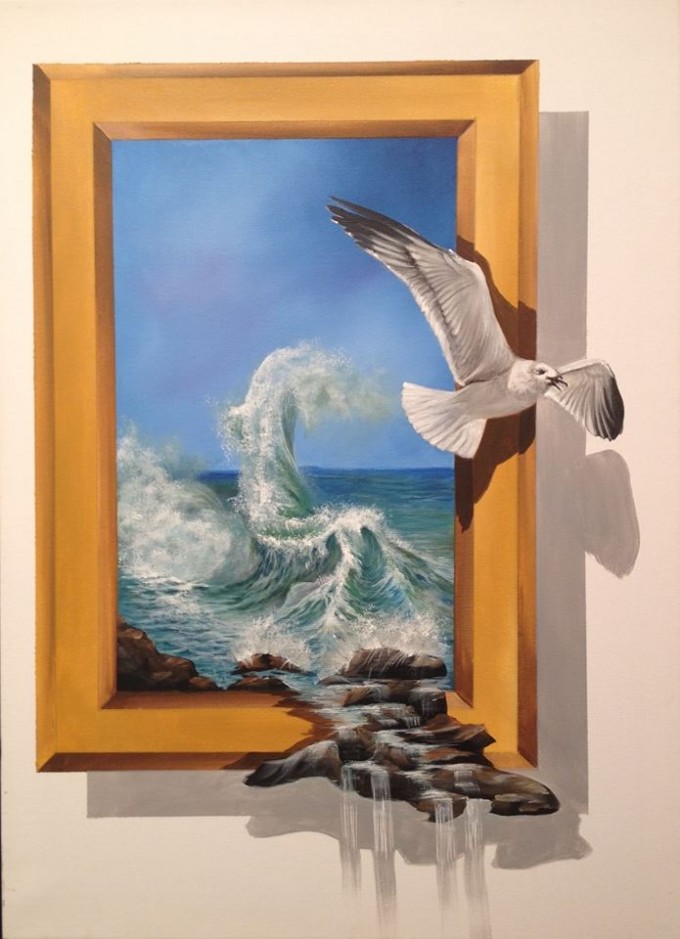
Eka Peradze

Name Eka Peradze Personal data Birth : 23.03.1974 – Tbilissi, Georgia Sex :F Nationality/ Georgian Address 13055Berlin Strausberger st 12a Education Art School Moses Toidze 1989-1991. Georgia (Tbilisi) I completed it with red diploma Categorie and medium Painting : Mixed media/canvas Movements and styles 3D-Painting.

My work is saved in private collection of well known people such as collection of successful politicians and famous people. For example collection of patriarch of Georgia. I have exposed my work in many countries of the world. All my expositions had one purpose: love, friendship, charity.


Easy day

"Each time we face our fear, we gain strength, courage, and confidence in the doing"

What about yourself makes you feel so ashamed, so scared, that you would go to any length to hide it?
The one thing that you think you’ve succeed in forgetting, until it returns to haunt you again in some unsuspecting moment.
I know it’s in you, because it’s in all of us; just under a different name.
Maybe yours is called a childhood memory, or an affair that you are hoping will never re-surface, the guilt that won’t fade away, a compulsive habit that you are trying hard to control…
Or maybe it’s your sexual identity or the gnawing sense of emptiness in your marriage.
Whatever it is that you are running away from, you are not alone.
You’re probably wondering how I am so sure. I’m sure because I ran away from it too
re you thinking “Well what if MY thing is something that no one will ever understand? What if it’s so terrible that were I to admit it, it would destroy my life?”
Trust me, even if you have the scariest impulses, or have done something truly horrific, the burden of carrying it secretively within you will kill you faster than the pain of admitting and seeking help.
Because your fear is more soul crushing that the actual thing that you are afraid of.

Begin the healing process today, using these lessons as a guide.
The Beginners Guide to Facing Your Shame/Fear

1. YOU ARE NOT ALONE

This was a huge revelation to me. When shame or fear takes over, it creates an invisible bubble around you, making you feel different, alone and unable to connect.

After all, everyone else seems so… “normal” right? And you have to live in this world, full of normal people with normal lives, feeling so isolated, sure that no one would like you, or even understand you if they knew your secret.
I totally get that feeling, I lived with it for years too. But it’s a lie.
Whatever you are ashamed of or scared of, YOU ARE NOT THE ONLY ONE.
This world is huge and EVERY story, every impulse, every thought that you fear, is being experienced by hundreds of other people too. Likely even thousands.
And you now something else? Someone whom you admire likely carries a secret of their own too, and may even be jealous of your seemingly “normal” life.
There is no such things as normal. Appearances are deceptive. We are ALL human and there is no need for you to pretend that you are not.
So even if you are plotting the murder of someone (I hope you’re not, but even if you are), YOU ARE NOT ALONE.
It’s not the impulse that separates you, it’s what you choose to do with it.

Which brings me to the next lesson.

2. Find a good therapist

“Fit” is important in therapy. And there are so many ways to find a therapist who is a good fit for you, that I am working on an e-book about this, but these are some highlights:
Ask your PCP (Primary Care Physician) for referrals.
Call your health insurance company, describe your struggle in very general terms and ask for names of providers who work with such issues.
If you have trust worthy friends, ask them for suggestions.
Many therapists now have websites/blogs where you can read and learn about their training, areas of expertise and basic philosophy.
Be open to some trial and error.
Ask for a “consultation” meeting first, so you can both assess the “fit”
During the consultation interview, make sure to ask the therapist about his/her views on topics that are important to you; like religion or cultural norms or parenting styles or sexual identity issues etc; (The worst thing would be to work with someone for weeks only to discover that he/she is an atheist while you are deeply religious or vice versa).
At the same time, be open to being challenged on your thoughts. That’s where the growth will come from.
Don’t feel like you have to spill the beans right at the first meeting. Get to know the person and get a feel of how good a “fit” it is. Ask questions about what areas of specialization and what “type” of therapy he/she is trained in.
Never ever lie to your therapist. It’s absolutely okay to say “I don’t want to talk about XYZ right now”, rather than lie.
Once you have begun working with someone, be as consistent and open as you are able to be.

3. Come clean with those who are affected
Through your struggle with the “thing”, if you have involved other people in any way, get help form your therapist to come clean with them. Gathering courage, when I finally spoke to my then-husband about my true feelings, it was both the hardest and the most liberating thing I had ever done. And it helped me respect myself again.
Don’t let your fear take away your integrity.

4. Stay in the moment
During those long lonely days in between therapy appointments, you will be alone with yourself and your thoughts.
In those days, the thing that I found most helpful was to stay in the moment. It sounds simple, but can be very hard to do, especially as your mind is busy churning out a thousand worries and emotions.
If classic mindfulness feels hard, I highly recommend this article and this one to find variations that work for you.
Learning to stay in the moment has been life saving for me.

5. Keep reminding yourself that what you are doing takes a heck of a lot of courage.
If you choose to face your inner struggles and better yourself, you are AMAZING and even the Gods will tremble before you.
I am not kidding. It is easier to face anyone or anything external, than it is to look within. What you are doing is rare, and beautiful. And even though the road is hard, it will lead to peace.
Don’t let anyone tell you otherwise.

6. Do something that gives you pride and connection

This is not a 100 meter dash, it’s a marathon. And just like in a marathon, it’s vital to nourish yourself along the way.
What is most important to you? What do you most like about yourself? What are you good at? What activities make you feel connected and needed?
At the intersection of these four things, is the activity that will nourish your soul.
For me, it was volunteering at an animal shelter.
For you, it may be taking your niece to the park every week, or serving at the local soup kitchen, or reading to people in hospice care or writing a book…
Whatever it is, push yourself to find it. And once you do, make it a regular part of your life. Self care is crucial to this journey.

So there you have it. A simple guide to help you face and beat that thing that is scaring you.
You deserve to feel alive. You deserve peace. You are worthy of being understood and loved.
At the very end, you will look back on your life story. Make your looking back be with pride.
Be brave. Be Goliath. Go forth and slay your fears. Break your invisible bubble and feel alive again.

YOU CAN DO IT.

Your soul is desperately counting on you to try.
Easy day
Today its the last day of 2014. May the new sun of next year brings with it new hope, peace, love, happy wishes and blessing of Allah for all of us.So welcome new year with a smiling face and hope for the best for us and for our country.


Easy day


“Fear is a natural reaction to moving closer to the truth.”

I was ready. It was time. I wanted to live my truth.

I had spent so many years ignoring my true desires, and what was in my heart. Instead, I followed the expectations of others. My family, my partner and what I felt that society expected of me.

I had a career that was financially rewarding, but I didn’t enjoy it, and I socialized with a group of people that I didn’t feel emotionally connected to.

At the time, I felt that I got a lot in return. I felt safe, secure and a part of something. Even though, it wasn’t something that I particularly believed in, or that was a good fit for my soul. From the outside, it looked like the perfect life.

When I began to awaken to this discovery, I didn’t realize what was happening. Now, I can see I was discovering my own truth, but at the time, it just felt uncomfortable and lonely.

When I made the decision to commit to my truth completely, and live life according to my passion and purpose, I felt so much fear. All the time.

It was a long time coming, and stepping into the unknown wasn’t easy.

Deep within me, I knew that I if I didn’t listen and take the leap then, I might never take it. And, I knew the ‘perfect’ time just did not exist. I did not want to waste any more time.

While some people encouraged me, others did not. That made me more fearful. I hesitated.

I decided that even thought I didn’t know how it would turn out, and I couldn’t control the outcome, all I could do was take a leap.

I began to study to become a psychotherapist, and over time began working as a psychotherapist. My emotional self was thawing out, and I began to feel my emotions again. The good, the bad and the sad. I was healing.

During this time of transition, on the surface, my life looked the same, but I felt very different.

The way I was showing up in my life had completely changed. I had awakened to something deeply authentic in me. To my creativity, wisdom, spirit, joy and love.

I didn’t really know why I was feeling different, but I knew I wanted to keep it up. I was catching on to a new way of being that was better than the past.

I felt open to receiving my truth and all the love in the universe. I began to feel a deep sense of peace within me, and I knew everything would be ok. I trusted that. I would always show up for me.

I allowed myself to be supported during this process. Both by professionals, friends and loved ones.

Sometimes we have to struggle a long time before we awaken and listen to the truth within ourselves. I know that I did.

Everyone’s truth looks different. And you don’t have to struggle.

You may come to realize that your life no longer works for you. Your job, your relationship, your community, or a combination of these things may no longer feel right for you now.

If you’re honest, some things in your life probably haven’t felt right for a long time.

When will you commit to your truth daily, so that you are perfectly aligned with love, consciousness and joy?

When I stepped into the unknown, I felt anxious and scared. That is my truth.

And now I am free.

To create a flexible future, based on love and desire, rather than external forces.

What about you? Is it time to live what’s in your heart? Here are some considerations on the path:

1. Turn towards your difficult feelings, instead of turning away — notice when you want to distract yourself by comparing yourself to others, working too much, exercising, watching TV, socializing, or by telling yourself that you are not normal for following your new path.

2. Be patient – take as much time as you need — you’ve lived your life in a certain way for a long time, and it will take time to learn a new way of being. Don’t rush it.

3. Embrace chaos – (and there will be chaos) — you may feel out of control and directionless sometimes, and this is to be expected. Welcome chaos, and within the chaos, there will be change.

4. Feel in order to heal — be open to your experience, and all emotions are welcome. The way you feel at any time won’t last too long.

5. Allow yourself to receive – open to your vulnerability and allow yourself to be supported by loved ones and professionals — people who will listen without judgement, take time to understand your struggle and help you make sense of what’s happening for you.

I’ve learned so much during this journey towards truth. I now take time for myself every day. I’ve added breathing, yoga, meditation and mindfulness practices to my daily life. I’ve established a practice of being with my feelings and feeling compassion and love for myself. I see so much love and beauty in myself, and within others as well.
Easy day

I spent hours reading and reading The Journals of John Cheever. I also read the A Writer’s Diary by Virginia Woolf and Vladimir Nabokov’s memoir Speak Memory.

And in each of these personal works, I learnt hard lessons that helped me view the world a little differently.

Here are five of those lessons:

1. Discipline is more important than passion


Don’t let anyone tell you otherwise.

Anytime, I avoid writing because I’m tired, bored or devoid of ideas, I remind myself of the importance of discipline.

Almost every writer I’ve read about sacrificed to pursue their work. They rose early or worked late into the night and the wrote because they had to and not just when they were inspired.

Virginia Woolf wrote most mornings until the early afternoon. Today, it’s striking to listen to read about scribbles of pen on paper and page.

“I generally write with heat and ease till 12.30; and thus do my two pages. So it will be done, written over that is, in 3 weeks, I forecast from today,” she writes.

Cheever bemoans his lack of discipline throughout his journals. However, in an entry written shortly before his death in 1982, he recognises he possessed this essential, and now-departing, personal strength.

“I have climbed from a bed on the second floor to reach this typewriter. This was an achievement. I do not understand what has happened to the discipline, or character, that has brought me here for so many years,” he writes.

2. It’s productive to have a side-interest or hobby


Yes discipline is important, but not at the cost of day-to-day life.

For a long time, I thought there was nothing more important than filling a blank page with sentences.

Now, I spend time swimming, running, reading, working, eating, meeting friends and sit quietly.

I do other things that aren’t writing.

And I’m OK with that.

Even if you’ve found a passion, side-interests are essential.

When you’re in danger of burning out, taking time pursue a side-interest will stoke the embers of what inspires you.

Woolf chronicled her long walks while Cheever wrote dozens of entries about swimming, cycling, and meeting friends.

“I do have trouble with the dead hours of the afternoon without skating, skiing, bicycling, swimming, or sexual discharges or drink,” he writes.

Nabokov had little time for eating, socialising or drinking coffee with friends.

Instead, he loved to solve chess problems and study butterflies. Both of these interests informed his work. And his novel, Zashchita Luzhina (The Luzhin Defense), features an insane chess player.

He writes in his memoir, “And the highest enjoyment of timelessness…is when I stand among rare butterflies and their food plants. This is ecstasy, and behind the ecstasy is something else, which is hard to explain. It is like a momentary vacuum into which rushes all that I love.”

If you’re having trouble finding a side-interest or hobby to complement your passion, exercise is the most simple and effective change you can make to your life

3. Even the greats are insecure


I don’t like writing posts like this. I worry how people will perceive me, and if I’ll upset or offend anyone.

I’m insecure, but (sometimes) I write these kind of posts anyway.

Virginia Woolf taught me even the greats were insecure about their work and that if I didn’t worry, then something would be amiss. Criticism can even help writers improve their craft.

She writes, “What is the use of saying one is indifferent to reviews when positive praise, though mingled with blame, gives one such a start on, that instead of feeling dried up, one feels, on the contrary, flooded with ideas?”

Cheever wasn’t one for paying too much attention to his critics.

He almost never re-read his works or the reviews about them.

That said, even Cheever occasionally dreamt (worried) about how people saw him.

He writes in his journal, “…and last night I had a dream that a brilliant reviewer pointed out that there was an excess of lamentation in my work.”

One way to overcome insecurity is to practice expressing gratitude.

I try to do this by thanking those who take time to read or even share my work, and by appreciating that writers today have more places to express themselves than before.

4. It’s natural to consider mortality and death


Several years ago,I became a father for the first time.

It was a happy time but after my son was born, I dreamt about death and how my life would end.

I knew I wasn’t depressed but, for a while, I worried there was something wrong with me. Then a friend (also a recent father), confessed the same thoughts.

As we get older, it’s natural to consider mortality and death. To pretend death isn’t exist is to live in ignorance of the bond we all share.

There are echoes of death in Woolf’s, Cheever’s and Nabokov’s memoirs, and these echoes show it is *unnatural* to never consider our place.

In the opening pages of Speak Memory, Nabokov unpacks the notion of time as a single linear event. He challenged the reader to see not just the end point of life, but the beginning of life as well.

He writes, “….my mind has made colossal efforts to distinguish the faintest of personal glimmers in the impersonal darkness on both sides of my life.”

Rust Cohle would agree.

5. There’s a place for happiness and sadness


The journals of Cheever, Woolf and Nabokov taught me that keeping a journal helps identify negative patterns, thoughts and behaviours.

Woolf writes about her depression at length. In 1934, she describes the period after she finished her experimental novel the Waves.

“I was, I remember, nearer suicide, seriously, than since 1913.”

John chronicles his alcoholism at length in his journal and towards the end of his book, it’s hard not the feel the same sense of relief as he does upon *finally* becoming sober.

I don’t want to be too morbid here.

The journals of these authors aren’t all filled with dark life lessons and lamentations. Nabokov writes at length about his love for his mother and father, his son and Russia of old.

And I’ve yet to read a more powerful personal mission statement than Cheever’s aspiration:

“To write well, to write passionately, to be less inhibited, to be warmer, to be more self-critical, to recognise the power of as well as the force of lust, to write, to love.”

And Finally…


I’m not going to lie and pretend there’s something in these journals for everyone. These are just lessons that authors John, Virginia and Vladimir taught me.

Perhaps they affected me because I’m interested in the lives of other authors.

I feel as if I know them because their problems and struggles are one-part unique and another-part universal.
Easy day


For over 25 years I wandered the world. Along the way, I had many adventures and learned about myself, people and the world.

These are some of the things I learned:

1. I learned that people all over the world want the same basic things: enough to eat, clear water, decent shelter, good health, education and opportunities for their children, an honest way to earn some money and respect.

2. I learned that some of the poorest people on this planet are also some of the most generous. They share what they have, even if it is only a glass of water. When someone offers you something from the heart it can be considered very rude to refuse the generosity.

3. I learned I could be comfortable in the company of world leaders and dignitaries and, with people in the slums of Africa, South America and Asia. Take away our outer trappings and labels to find underneath we are all the same.

4. I learned you have no idea what you will do when mugged. In Lesotho, I had a knife to my throat and still negotiated to keep the things in my bag while offering them my money. They agreed. Foolishness or a moment of total clarity?

5. I learned that each culture has a different interpretation of personal space. From experience, I have found that the more populated a country is the less personal space you are given.

6. I learned in some countries going by local bus meant sharing a space with more than just people. As this is the only means of transportation for many, you could find yourself sharing a space with an assortment of chickens, goats, produce and anything else which needed to be transported.

7. I learned to appreciate everything I had and yet to have no attachment to them. This was taught to me when Iraq invaded Kuwait. During this war I lost most of my possessions, including all my professional documents. Things can be replaced.

8. I learned how resourceful I was. In Zambia, daily skyrocketing inflation resulted in a diminishing salary. Being open to suggestion, I found alternative means of earning more money, and lived well for two years and became closer to the local people.

9. I learned to trust strangers. In Alexandra, Egypt, a friend and I were standing under a street sign trying to decipher the Arabic on our map with the Arabic on the sign when an elderly man stopped to help. With gestures we indicated where we wanted to go. He called someone, a young boy appeared, then he waved for us to follow the boy. We did and we arrived at our destination. Later, we discovered we were in a part of the city that most Egyptian wouldn’t enter unless they absolutely had to. Sometimes you just have to trust and know everything will be just fine.

10. I learned the joy of spontaneous laugher, singing and dancing with new friends in Greece, Russia and Latvia. Freedom is completely enjoying the moment.

11. I learned to be completely aware of my surrounds and notice things that were slightly off. In Ethiopia this saved me from being shot at. I was driving toward the centre of a small city when I noticed how still everything was. In an instant I knew something was wrong. Within seconds I was facing tanks, soldiers and a mob of people. Because I had slowed down, I was able to take the next corner and get out there right before shots were fired. Trust that voice that says, “get out now”!

12. I learned to experience life fully and to embrace whatever was presented. I learned to love all people and to respect this beautiful planet that we live on.

You don’t need to travel to the world for experiences, they are present all around you every day. You just have to be willing to look at the blessings each holds.
Easy day

It’s very easy to compare ourselves to others in order to gauge our own lives. Like Karen, I often find myself looking at how other parents juggle their careers, family commitments, and passions. Then I get nervous that I’m doing something wrong. It’s times like these that I have to force myself to stop the comparisons, for several good reasons.
If you often find yourself lacking, you’re setting yourself up for failure.

Constantly judging your achievements against successful superstars often leads to low self-esteem. In life, there is always going to be someone subjectively “doing better” than you, and if you judge yourself by those standards, you’re never going to feel good about yourself. This can lead into a downward spiral of giving up on goals because you feel you can never measure up.
If you usually feel superior to others, you’re ignoring areas that you could improve on.

You might think that comparing yourself to people who are “beneath you” will help you achieve goals. While it may help your self-esteem, people who belittle others often become too egotistical. I’ve seen this played out again and again with start-up video game companies. Whenever faced with genuine criticism of their games – whether that be from customers or developer peers – they lash out that people just “don’t understand the vision” of their game. In the same breath, they don’t understand why their game doesn’t sell. In order to improve in a skill, you have to be able to take critical feedback and turn it into something you can use to improve yourself. This gets lost if you think you’re better than everyone else.
Comparisons don’t take into account our differences.

Ultimately, comparisons generally don’t take into account the many differences individuals may encounter. First, the successfu” person is often portrayed as an overnight sensation when, in fact, this almost never happens. Successful people work hard, and their setbacks are rarely celebrated. This makes the successful person appear lucky when they are not. Second, there are no true one-to-one comparisons. People will encounter different obstacles on their path to success, and you can’t truly judge your own worth by looking at someone leading a completely different life than your own.
The only real measurement of success is yours.

Ultimately, success isn’t about someone else’s life. It’s about your life and your outlook about it. For example, let’s say you are an aspiring children’s author, and your book gets picked up by a local press. That, in turn, gets you more writing gigs and you eventually make a decent living in your region. If you compared your body of work to Dr. Seuss in terms of profitability and fame, you would appear wanting. But making any living out of writing children’s books is nothing to sneeze at. Letting go of comparisons can help you define success for yourself.

If I were to compare myself to Karen, she would blow me out of the water in many ways. Since the day we graduated together, she has gone on to have a more high profile career. She always has and still does run circles around my modest exercise routine. And she’s managed to do this while having a family. But my life is not hers, and I would not want to compare myself to her. We have found our own paths, each with its own merits. I’m happy for her, and I hope by sharing this article, she can become a little happier about her life without all the comparisons.
Related Posts Plugin for WordPress, Blogger...